

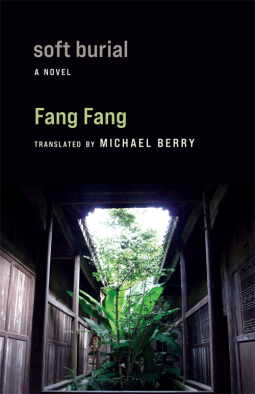
Soft Burial by Fang Fang was originally met with critical acclaim upon its publication in China in 2016 and even received the Lu Yao Literature Award, but by May 2017, the work had been denounced and removed from stores.
The novel opens with a nameless protagonist suffering from amnesia since 1952 after being pulled, barely alive, from a river. Any attempts to make her remember cause her extreme pain, and she is warned that, for her safety, it is better to keep the past buried. Now, an old woman, a change in her life, awakens those memories, and she must relive them in reverse order. Her son, Qinglin, confused by the changes in his mother and inspired by the secret diaries of his deceased father, begins pursuing an understanding of the past and must wrestle with the idea that some things are better left forgotten.
Soft Burial is a moving, mysterious, and experimental novel exploring the effects of the Chinese Land Reform, generational trauma, and the role of memory.
Thank you to NetGalley and Columbia University Press for an advanced copy of this novel for review consideration. All opinions are my own.
For readers wanting to learn more about writing, Fang Fang has written a beautiful and moving novel while exploring an unusual structure that serves to make the novel as impactful as it is. She uses multiple perspectives, differing timelines and locations, diary entries, and memories told in reverse. These structural elements do not exist to make the novel more “literary” but instead work to serve the story. To change the structure would be to change the heart of the book.

- Harlem Rhapsody by Victoria Christopher Murray - December 4, 2025
- “The Song of the Blue Bottle Tree” by India Hayford - May 15, 2025
- “Soft Burial” by Fang Fang - April 24, 2025
Sign up to our newsletter to receive new articles and events.