


by Michele Alouf
Some of my writing friends and I have formed a weekly “therapy” group where we discuss our accomplishments (or lack thereof) during the previous week, craft strategies, creative struggles, and goals for the week ahead. A recurring theme is productivity—how we get stuck, deal with distractions, keep motivated, stay organized, and find ways to write forward. We are constantly trying new approaches to meeting our goals, yet running into the same walls.
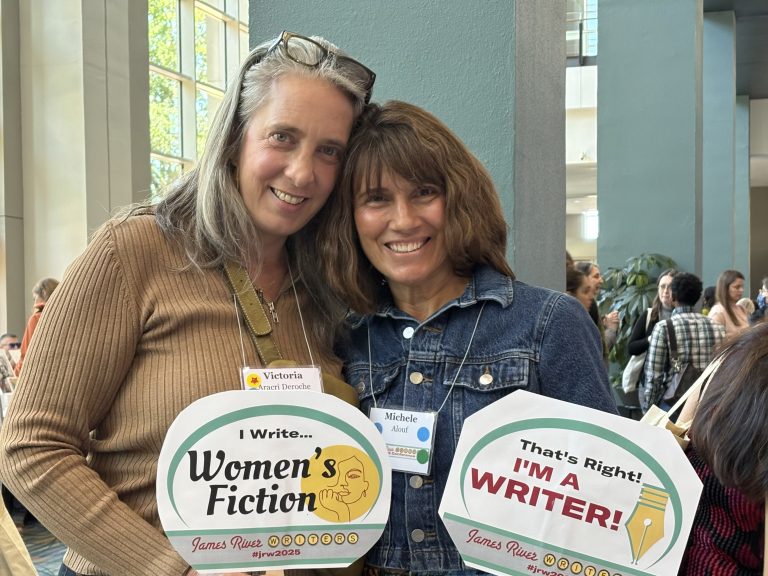
Recently, I met Kristina Chilian, a productivity coach for writers, at the 23rd Annual James River Writers Conference in Richmond, Virginia. I was intrigued by her passion for helping writers “keep the magic flowing.” She kindly agreed to let me ask her questions about her business, The Abundant Writer.
MA: Hi Kristina, thank you for joining us on Story Street. Please tell us a little bit about yourself, your writing background, and what inspired you to want to help writers overcome obstacles and achieve their creative goals.
KC: Hi, Michele, thanks so much for having me! As you mentioned, I am a productivity coach for writers, and I live in the greater Richmond area with my husband, two sons, and four rescue pets. I really am just obsessed with all things reading and writing and have been my whole life. I was one of those kids who loved to write poetry, songs, plays, skits — you name it. I was also a voracious reader, a nerdy GenX teenager who read The Stand at lunchtime while everyone else was socializing.
I’ve been working with writers in one way or another for over twenty-five years. I’ve worked in customer service for the publishing arm of Pearson Education, as an editor at an independent e-book publishing company, and as a freelance writer and editor focused on sales and marketing copy. I helped executives clean up their communications and worked with PhD candidates on dissertations.
When my sons reached school age, I transitioned into a new career as a high school English teacher and eventually a high school librarian. This gave me a much more flexible schedule (no grading!!). I finally had time to write.
What did I do with all of this newfound time? Hours and hours of research for my story idea and a chapter one that I revised five times. I did not complete any of the projects I started. I’d get partway into planning a novel or short story and then decide that I had a better idea and move on to something else.
It wasn’t until I read Julia Cameron’s classic, The Artist’s Way, that I realized my anxious, perfectionist thoughts and beliefs around writing were fairly dysfunctional and were keeping me from maintaining focus and completing a project. I worked with a life coach to unearth a shocking number of limiting beliefs and to develop more clarity and confidence in all areas of my life, not just writing. I learned to ignore the perfectionist voice that kept telling me to rewrite everything and that nothing I wrote was good enough. I was able to let myself be creative without all of the hangups, and as a result, my writing began to flow.
The teacher in me thought, “What if I could teach others how to apply these tools to their own writing?” I started reading everything I could find on creativity coaching. I also enrolled in an accredited coach training program to make sure that I had the training, tools, and resources necessary to best support my clients.
I dreamed of starting a business that helped writers overcome the types of obstacles that held me back and made me question my own creativity and abilities. To make that dream a reality, I leveraged the very coaching tools I now teach writers.
As trite as it might sound, I do feel blessed to be able to help others with the same challenges that I faced as a writer. I’m so grateful for the relationships that I’m building with different writers, editors, and agents, and working within this community feels like home to me. I love my job!
MA: What problems typically prompt writers to seek your services?
KC: In general, writers come to me if they’re dissatisfied with some aspect of their writing life and they’ve tried other avenues already.
One common challenge I see is time management, where writers can’t seem to find the time to write, despite it being a priority for them. This was one of my own issues, so I completely relate. During our coaching sessions, we take a look at how they’re spending their time, how and why they’re making the choices that encumber their time, and the thoughts and beliefs that might be keeping them from choosing to write. We also look at different time management systems to ensure they’re scheduling their writing time and meeting the writing goals they want to achieve. Oftentimes, the accountability that is inherent in the coaching process is enough to move writers forward.
Another common problem I see is a lack of confidence. This can show up in a number of ways: imposter syndrome, a fear of querying or submitting work, a fear of failure, and trouble accepting feedback. I love working with clients on mindset issues like this because we dig deep to expose the thoughts, beliefs, and expectations that create the gap between what the clients want and what they believe they can actually achieve. Just like I did, my clients have huge breakthroughs when they realize they can let go of beliefs that are no longer serving them. It’s so inspiring to watch their confidence grow by leaps and bounds!
Finally, there’s the issue that Steven Pressfield made famous in The War of Art: resistance. This most often manifests as procrastination or lack of motivation. Writers want to write, they even make time to write, but they just can’t seem to make themselves sit down and write. The mere thought of writing brings up a slew of uncomfortable feelings. Although everyone procrastinates for their own personal reasons, this really comes down to our natural proclivity for avoiding discomfort. During coaching sessions, we uncover the element(s) of writing that clients are avoiding and the thoughts they’re having which are causing this discomfort. Once these thoughts are brought out into the light, clients realize that the reality of the situation is not as bad as their thinking made them believe. (Don’t believe everything you think!) They quickly go from procrastinating to looking forward to their writing time.
These are the most common issues I see, and you may notice a recurring theme of working with clients’ thoughts and beliefs. If we want to change our habits, establish new and sustainable routines, and really see significant progress, it’s not enough to simply know the steps. If it were, then reading a book or watching a video would be sufficient to overcome these challenges. It’s important to understand why we keep making the choices that have brought us to this point, and examining our belief systems is the key to unlocking that door.
This is why certified coach training is so important, and it’s the difference between me and most other writing/book/publishing coaches. Like them, I have a background in the writing industry; however, I have also completed certified training in coaching methods that use positive psychology and cognitive behavioral therapy tools as part of the process. These tools help us go beneath the surface to uncover the root of the issue, helping clients experience immediate progress and results.
MA: Our readers would love to hear about your 10-week coaching program and The Abundant Writer Method. Can you talk about your approach and what students can expect to learn?
KC: My pleasure! This program is the culmination of all my years of education, training, skills, and experience as a writer, teacher, and coach. It is a ten-week program of weekly coaching sessions that address the different areas that typically challenge writers.
We start off with a diagnostic assessment I created called The Writer’s Compass. This simple yet powerful tool reveals a writer’s satisfaction level in eight different areas that support writing, demonstrating both strengths and areas for improvement. Based on these results and a writer’s overall writing goals, we then establish milestones for achieving those goals.
Next, we begin to tackle the specific areas of concern. Is it time management? Mindset? Community? Skills? This is where I customize the program for each writer. While each week includes a new educational tool to expand the writer’s capacity and help them develop more clarity around their writing practice, I also coach the writer on the specific challenges that come up during the previous week. This double-pronged approach is both efficient and effective, yielding significant results. Clients are more inspired, motivated to write, and are better able to sustain positive momentum. Just this week, one of my clients saw a 200% increase in satisfaction in the area of time management, and she’s only halfway through the program! She also hit each of her writing milestones already and was excited to create new ones.
While the middle weeks of the program are focused on overcoming specific challenges such as time management, mindset, focus, and organization, the final weeks establish the systems, support, and resources needed to sustain forward momentum. By that time, we have a pretty good idea of what does and doesn’t work for the client, so we focus on shoring up the progress already made and clearing the path toward continued growth.
MA: How can writers know if this program is right for them?
KC: I’m going to start off by explaining who this program is not for, because that might be even more helpful. If you’re looking for someone to walk you through the publishing process, to review your manuscript, or to help you outline, write, or edit a book, then this is not the program for you. You would be better served by a publishing coach, a book coach, or an editor. They focus on the process of writing and the writing itself.
I focus on the writer. If you’re struggling with self-confidence, procrastination, imposter syndrome, time management, fear of failure, fear of success, disorganization, developing a community, accepting feedback, or anything else that is standing between you and your writing goals, this is the program for you.
MA: Your weekly one-on-one calls are tailored to fit each writer’s needs. Can you give a few examples of what these calls look like?
KC: Absolutely! During a 45-minute session, we spend the first few minutes catching up and seeing how your week went. I like to celebrate any wins you’ve had and then discuss what challenges came up as you tried to complete the action steps you decided upon last session.
During the middle part of the session, I’ll ask a series of questions to help bring awareness to any thoughts or feelings that led to your actions (or lack of action). I will also share resources, tips, and tricks that I feel will help you with that challenge.
The last part of the session is working with a specific tool for that week. For example, in Week Three, you’ll complete a Values Inventory, where you’ll decide what values you will need in order to reach your writing goals and then create action steps that honor those values. When I completed the Values Inventory, my top value was “consistency.” I created action steps to help me be more consistent with my writing, such as scheduling writing time into my calendar each week and rewarding myself for completing a short list of weekly writing goals.
Each of the tools we use will help you develop clarity and focus as you strive toward your goals. I include them in a digital workbook that comes free with the program, allowing you to leverage them whenever you want. No matter what challenge pops up in the future, you’ll have a tool to refer back to for support and guidance.
We close the session by reviewing the insights you had during the session and setting action steps for the following week. These action steps are where you apply the education and coaching tools and create forward momentum.
That’s the general arc of a session! The calls go by quickly, and my goal is for you to leave our call feeling empowered, encouraged, and inspired.
MA: Your website reflects your giving spirit. I noticed that you offer a free guide, Simple Shifts to Quiet Your Inner Writing Critic, and that ten percent of your program proceeds support the nonprofit Reading is Fundamental. Please tell us about this organization and what inspired you to so generously support it.
KC: Thank you! Giving back is very important to me, and children’s literacy has been a huge challenge post-COVID. Initial scores we got back in local schools showed that students were, on average, reading three years below grade level. Reading is Fundamental (RIF) provides literacy resources for children around the country. They partner with local organizations and even companies like Amazon and Barnes & Noble to get books into the hands of children. What I love about RIF, specifically, is that they’re not just trying to help kids learn to read, they’re also helping kids love to read. In addition, their Charity Navigator score is a 98%, which means that they are transparent with their finances and are good stewards of our donations. I also happen to have fond memories of RIF commercials from the 1970s and 80s. “Give a kid a book, and you’ll give a kid a break.”
MA: Finally, if you had to choose just one piece of advice to share with writers struggling with productivity, what would it be?
KC: My advice is to start to notice your thoughts, rules, beliefs, “shoulds,” and expectations that you have around writing. What are you telling yourself without even realizing it? Whose voice is that in your head? What do you assume to be true because other people have been speaking that into your life? What are you avoiding?
Take some time to question, argue with, and evict these old, outdated, passed down, unhelpful, cruel, limiting thoughts and beliefs, and give yourself some grace. If you need help with that, let me know.
Remember, you were born to create, your voice is needed, and no one has the right to tell you otherwise. Not even you.
MA: Thank you for taking the time to help and encourage our Story Street followers, the broader writing community, and young readers worldwide.
KC: Thank you for allowing me to share my passion for writing and creativity! As a thank you, I’d like to offer your writing community the diagnostic tool I use at the beginning of The Abundant Writer Method. It’s called The Writer’s Compass, and it will help you clarify what areas of your writing practice you want to improve and what action steps you can take to begin that process. This is a very powerful tool that can help bring balance to your writing practice. You can find that tool at www.theabundantwriter.com/compass.

- Helping Writers “Keep the Magic Flowing,” an Interview with Productivity Coach Kristina Chilian - October 23, 2025
- A World of Connection Close to Home: My Experience at the 23rd Annual James River Writers Conference - October 16, 2025
- Reframing Rejection: Giving Your Tired Hang-ups Vibrant New Life - June 27, 2025
Sign up to our newsletter to receive new articles and events.